
Playa norte
230.000 - 540.000 €Indicative guide pricesIt is priced above the municipal asking figure.
Beach
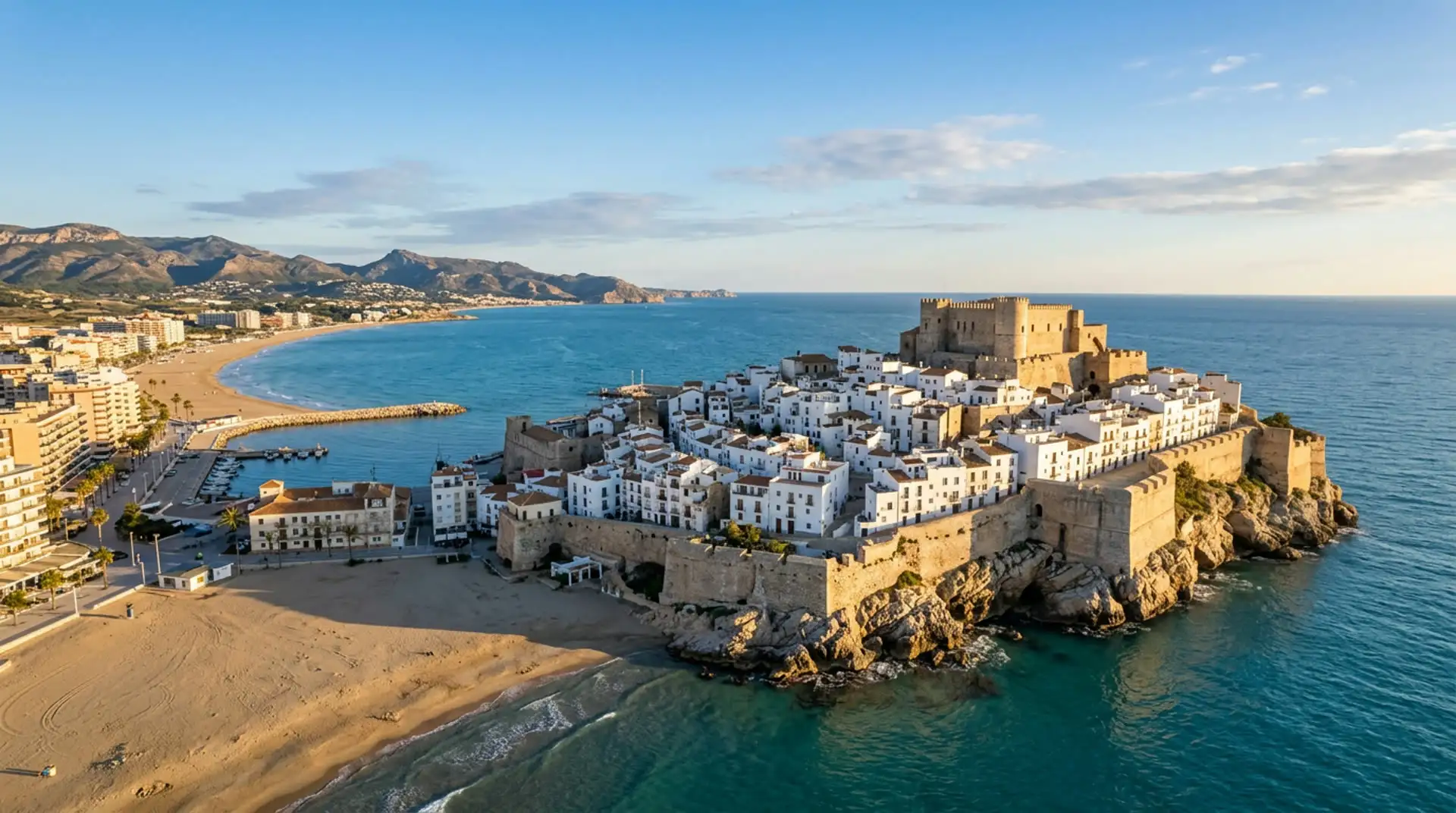
Peñíscola is a small fortified town on a rock promontory at the northern end of the Castellón coast. Its castle, raised by the Templars on a former Arab alcazaba and later the papal seat of Benedicto XIII, has been a national monument since 1931, and the walled town around it a protected historic ensemble since 1972. The essential fact for a buyer is scale: fewer than nine thousand people live here, in a town whose public profile is far larger than its population.
It is also unusually international for its size. The 2025 annual census records 8,748 residents, of whom 2,554 hold a nationality other than Spanish, close to three in ten. European Union citizens form the largest group, the biggest single nationalities are Moroccan, Romanian and French, and British residents number barely a hundred. No one community dominates.
The market is moving quickly. The July 2026 report puts sale prices up by nearly a fifth over the year, a faster rise than either Benicàssim or Oropesa del Mar, with the municipal average above Oropesa's and below Benicàssim's. The municipality stands at its recorded price maximum, and July 2026 is the first month of Idealista's revised methodology, which the portal states preserves comparability.
The verdict
The upside is real. So is the downside. Both matter more than any brochure will admit.
A protected old town with documented history
The castle has been a national monument since 1931 and the old town a protected ensemble since 1972, with Renaissance walls to the west and north, medieval work on the sea cliffs, and a papal past under Benedicto XIII.
A small town with a broad international mix
Close to three in ten residents hold a foreign nationality, yet the largest single group, Moroccan, numbers under five hundred people. European Union citizens together form the biggest bloc, and no single community dominates the town.
Priced below Benicàssim, with a wide district range
Idealista's July 2026 municipal average is lower than Benicàssim's. Among the priced districts, Playa norte costs more than half again as much per square metre as Llandels, so different budgets have somewhere to look.
Long distance trains stop at the station in Benicarló
Benicarló-Peñíscola station, in Benicarló, a different municipality, showed Alvia, Intercity, Regional, Regional Expres and Rodalies R16 departures on the last checked date, towards Barcelona, Valencia, Vinaròs and Tortosa, and Cercanías line C6 reaches it from Valencia.
Schooling in town from infant to secondary
Five registered centres serve the town: a public infant and primary school, a secondary institute, a private school running from infant to secondary, an adult education centre and a music school. Three are public, two private.
No railway station, despite the station name
Adif's Benicarló-Peñíscola station is in Benicarló. A two town station name is a naming convention, not a station in both towns, and Renfe's own planner lists it simply as Benicarló. Peñíscola itself has no rail service.
The reference hospital is in Vinaròs
Peñíscola is assigned to health department 01, Vinaròs, with Hospital Vinaròs as its reference hospital, while Benicàssim and Oropesa del Mar fall under the Castellón department. There is no hospital in the municipality.
No climate normals exist for the municipality
AEMET publishes exactly one climate normals station for the whole of Castellón province, and it sits in Almassora, a different municipality. Our climate section is empty because no honest table exists for Peñíscola itself.
No price data for the old town
Idealista lists seven districts but prices only five. Casco Antiguo and Centro, the two a buyer drawn by the walled town would ask about first, are exactly the ones without published figures.
Buying at the recorded price maximum
The July 2026 municipal average is Idealista's historic maximum for Peñíscola, reached after a rise of nearly a fifth in a year, and that year spans a methodology change Idealista introduced in July 2026.
Editor's note
Peñíscola suits a buyer who wants the walled town and a small year round community, and who accepts that the services sit elsewhere: the station in Benicarló, the reference hospital in Vinaròs, the nearest climate record in Almassora. If daily rail matters, Benicàssim and Oropesa del Mar both have stations of their own on Cercanías line C6, and both are assigned to the Castellón health department, with the General Universitario in Castelló de la Plana as reference hospital. Benicàssim is the larger of the two and dearer per square metre than Peñíscola; Oropesa del Mar is cheaper per square metre, and close to two in five of its residents hold a foreign nationality, so the international mix there is stronger still. A buyer who needs a full city, with Cercanías stations across town, an Aena airport and hospital assignment by address, should read our Valencia guide instead. And if you need priced data on a historic quarter before you commit, Peñíscola's old town has none, which is reason enough for some buyers to look on.
Updated 31 Aug 2026
INE Annual Population Census, nationality basis, 1 January 2025
Where to live and what to expect at each price point.
It is priced above the municipal asking figure.
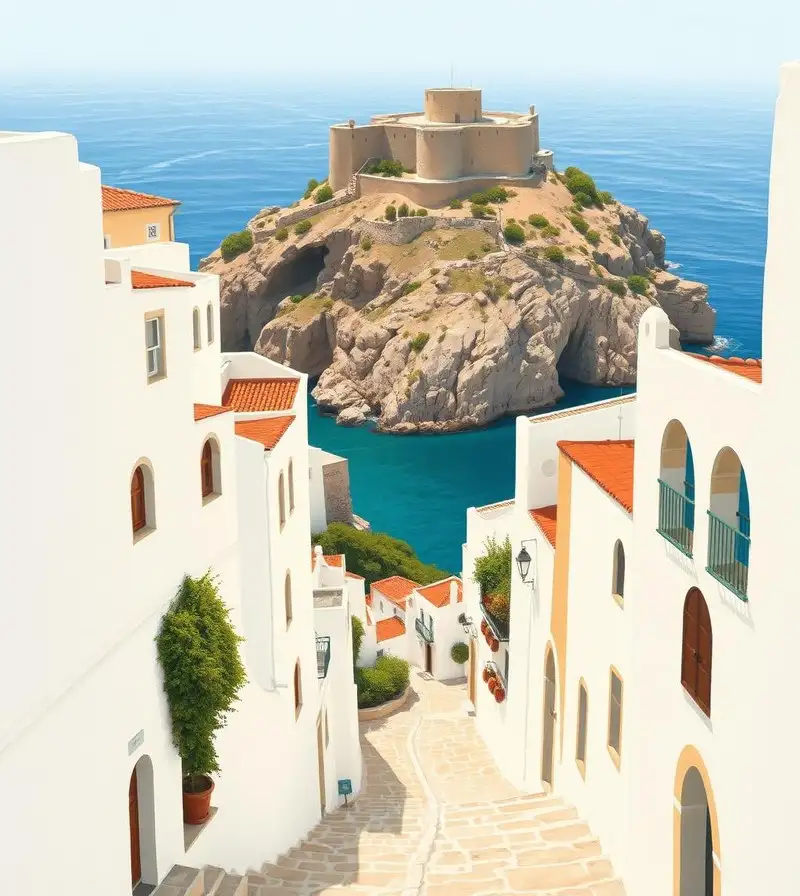
It is priced above the municipal asking figure.
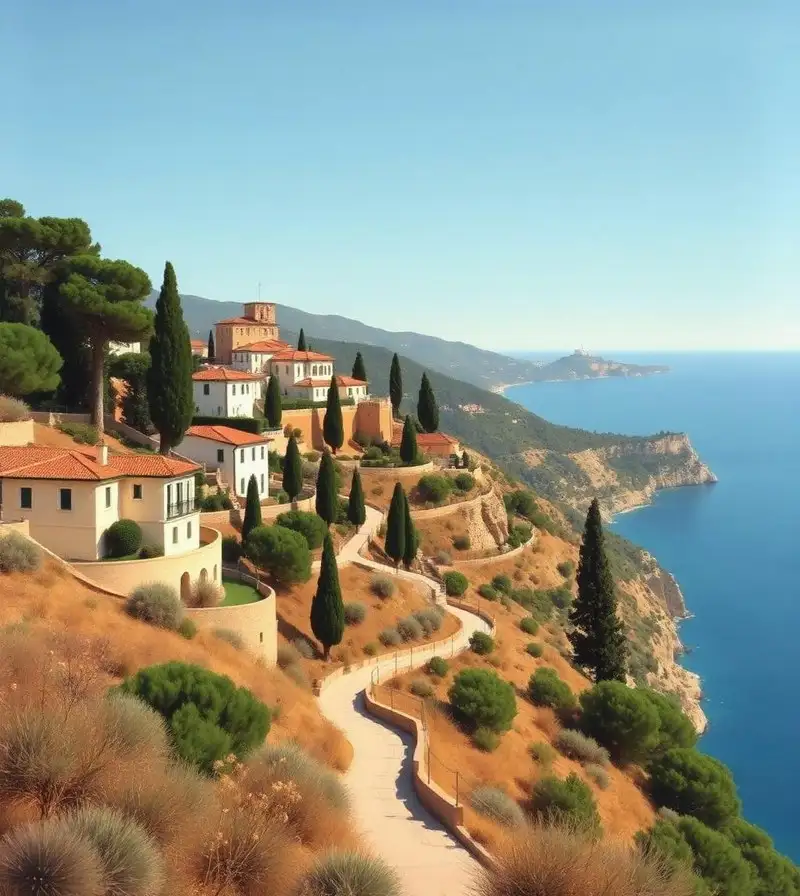
It is priced below the municipal asking figure, and it is rising faster than the municipality over the year. It stood at its recorded high that month.
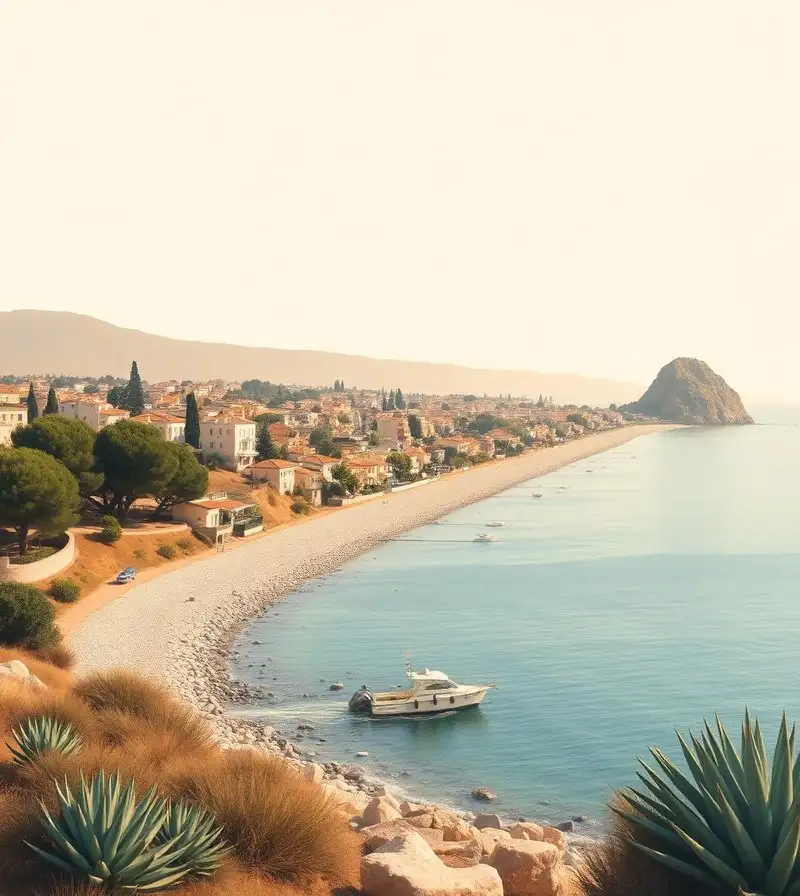
It is priced below the municipal asking figure, and it is rising more slowly than the municipality over the year.
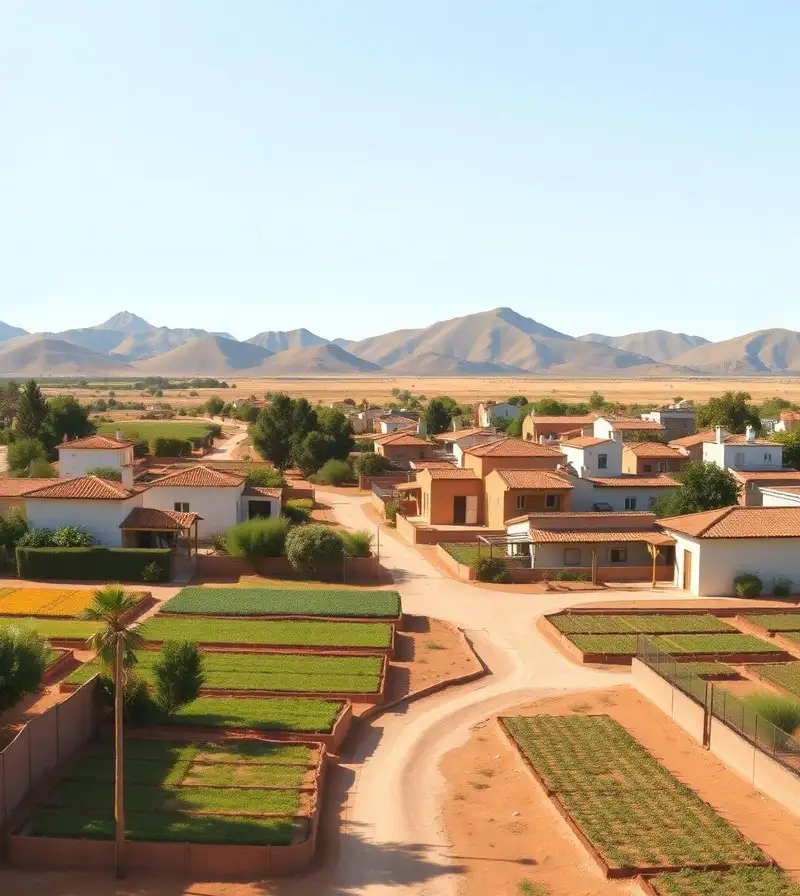
It is priced below the municipal asking figure, and it is rising faster than the municipality over the year. It stood at its own recorded high in that month.
Honest answers to the questions buyers actually ask.
Transfer tax rates as of August 2026. Rates are set per autonomous community and do change. Confirm the current figures with a Spanish lawyer or tax adviser before you budget.
The pros and the cons of every town, with sourced data on prices, climate and costs.
Your property search, saved cities, mortgage calculator and a step-by-step buying guide, from your first search to getting the keys.
Local agents who speak your language, and owners selling their own home, contact you about homes that fit your search.
Agents and owners ask to connect first. Your contact details are only shared with the people you accept.
Our comprehensive guide covers everything foreign buyers need to know - from NIE numbers and residency permits to mortgages and legal requirements.
Use our free mortgage calculator to estimate monthly payments, compare loan scenarios and understand the true cost of buying in Spain.